Semaglutide is a glucagon-like peptide-1 (GLP-1) receptor agonist studied extensively for chronic weight management, appetite regulation and metabolic health. Clinical research has demonstrated substantial average weight reduction with specific semaglutide formulations. Today, semaglutide appears in several product formats, including pre-filled injection pens, oral tablets and separately marketed peptide vials. This guide examines the clinical evidence, explains the differences between product presentations and highlights the importance of formulation-specific documentation.
What Is Semaglutide?
Semaglutide is a synthetic peptide that acts as an agonist of the glucagon-like peptide-1 receptor, commonly abbreviated as GLP-1.
GLP-1 is a naturally occurring hormone involved in the regulation of appetite, blood glucose and gastrointestinal function. Semaglutide is designed to activate the same receptor while providing a longer duration of action than naturally occurring GLP-1.
Semaglutide has been investigated in clinical studies involving type 2 diabetes, obesity, overweight and cardiovascular outcomes.
Approved semaglutide-containing medicines include products marketed under the names Wegovy, Ozempic and Rybelsus. Their approved indications, formulations and dosing schedules are not interchangeable.
Understanding semaglutide requires distinguishing the active molecule from the finished pharmaceutical product. A peptide identified as semaglutide does not automatically have the same evidence, quality or clinical properties as an approved semaglutide medicine.
How Does Semaglutide Work for Weight Management?
Semaglutide acts on GLP-1 receptors involved in appetite regulation and metabolic signaling.
Its effects include several physiological mechanisms that contribute to changes in food intake and glucose regulation.
Appetite and Satiety
GLP-1 receptor activity influences areas of the central nervous system associated with appetite and feelings of fullness.
In clinical studies, semaglutide treatment has been associated with reduced hunger, increased satiety and lower energy intake.
Gastric Emptying
Semaglutide can delay gastric emptying, particularly during certain phases of treatment. This effect may contribute to gastrointestinal symptoms and can influence the absorption of some oral medicines.
Glucose Regulation
Semaglutide enhances glucose-dependent insulin secretion and reduces glucagon secretion when blood glucose levels are elevated.
These effects explain its use in type 2 diabetes management and its broader metabolic profile.
Weight Reduction
Clinical weight reduction with semaglutide is primarily associated with reduced energy intake. The magnitude of weight change depends on the studied formulation, treatment duration, participant characteristics and lifestyle intervention.
Clinical Evidence: Semaglutide and Weight Loss
Semaglutide has been evaluated in several large randomized clinical trials, including the STEP clinical development program.
These studies provide evidence for particular pharmaceutical formulations used under defined clinical conditions.
STEP 1: Weight Reduction Over 68 Weeks
The STEP 1 trial investigated once-weekly subcutaneous semaglutide 2.4mg compared with placebo in adults with overweight or obesity without diabetes.
The study included 1,961 randomized participants and evaluated changes in body weight alongside lifestyle interventions.
At week 68, the mean body weight change was approximately 14.9% in the semaglutide group compared with 2.4% in the placebo group.
The results demonstrated clinically meaningful average weight reduction in the studied population.
These findings do not mean that every individual will experience the same result or that the outcome applies to untested semaglutide formulations.
SELECT: Cardiovascular Outcomes
The SELECT trial evaluated semaglutide 2.4mg in 17,604 adults with established cardiovascular disease and overweight or obesity, but without diabetes.
The trial reported a 20% relative reduction in the risk of its composite primary cardiovascular endpoint compared with placebo.
This outcome concerned cardiovascular death, nonfatal myocardial infarction or nonfatal stroke in the specific study population.
What the Evidence Means
Clinical findings support the effectiveness of defined semaglutide medicines for specified populations and indications.
They do not establish equivalent safety or effectiveness for every product advertised as semaglutide, particularly unapproved peptide powders or independently prepared formulations.
Semaglutide Product Formats Explained
Semaglutide appears in several pharmaceutical and commercial presentations. Product format is an important consideration because formulation, administration method and supporting evidence may differ.
Main Presentation Categories
- Pre-filled injection pens containing liquid semaglutide
- Oral tablets formulated for gastrointestinal absorption
- Multi-dose injectable vials supplied through certain compounding settings
- Lyophilized peptide powders marketed in laboratory or research catalogs
These categories should not be treated as directly interchangeable.
In particular, a dry peptide vial is not the same finished pharmaceutical product as a manufacturer-labeled injection pen or an approved oral tablet.
Injectable Semaglutide: Pre-Filled Pen Formats
Injectable semaglutide is supplied in liquid formulations designed for subcutaneous administration.
Manufacturer-labeled pens are associated with approved products such as Wegovy and Ozempic, although their approved uses differ.
Wegovy Injection
Wegovy is a semaglutide medicine developed for chronic weight management in eligible populations and other approved indications.
The U.S. product labeling includes pre-filled injection pens. In 2026, the FDA also approved a higher-dose 7.2mg Wegovy HD injection for certain adult patients.
Ozempic Injection
Ozempic contains semaglutide and is primarily associated with type 2 diabetes treatment and specified risk-reduction indications.
Although the active molecule is the same, Ozempic and Wegovy have different labeling, indications and product configurations.
Important Pen Characteristics
- Liquid pharmaceutical formulation
- Manufacturer-defined concentration and delivery system
- Product-specific administration instructions
- Validated storage requirements
- Defined strengths and labeling
The presence of semaglutide in a liquid formulation does not automatically make two products pharmaceutical equivalents.
Oral Semaglutide Tablets
Semaglutide is also available in specially formulated oral tablets.
Unlike injectable semaglutide, oral semaglutide must be formulated to support absorption through the gastrointestinal tract.
Rybelsus Tablets
Rybelsus is an oral semaglutide medicine associated with the management of type 2 diabetes and other approved indications.
Wegovy Tablets
Wegovy tablets are an oral semaglutide presentation approved in the United States for specified weight-management and cardiovascular indications in adults.
The tablet formulation and its clinical evidence should be considered separately from injectable semaglutide.
Why Oral Formulation Matters
Semaglutide is a peptide, and peptides generally face challenges when administered orally because of digestive degradation and limited absorption.
Approved oral formulations use specialized pharmaceutical technology to address these challenges.
A capsule or tablet simply containing semaglutide powder cannot be assumed to provide the same bioavailability as an approved oral semaglutide medicine.
Semaglutide Peptide Vials and Lyophilized Formats
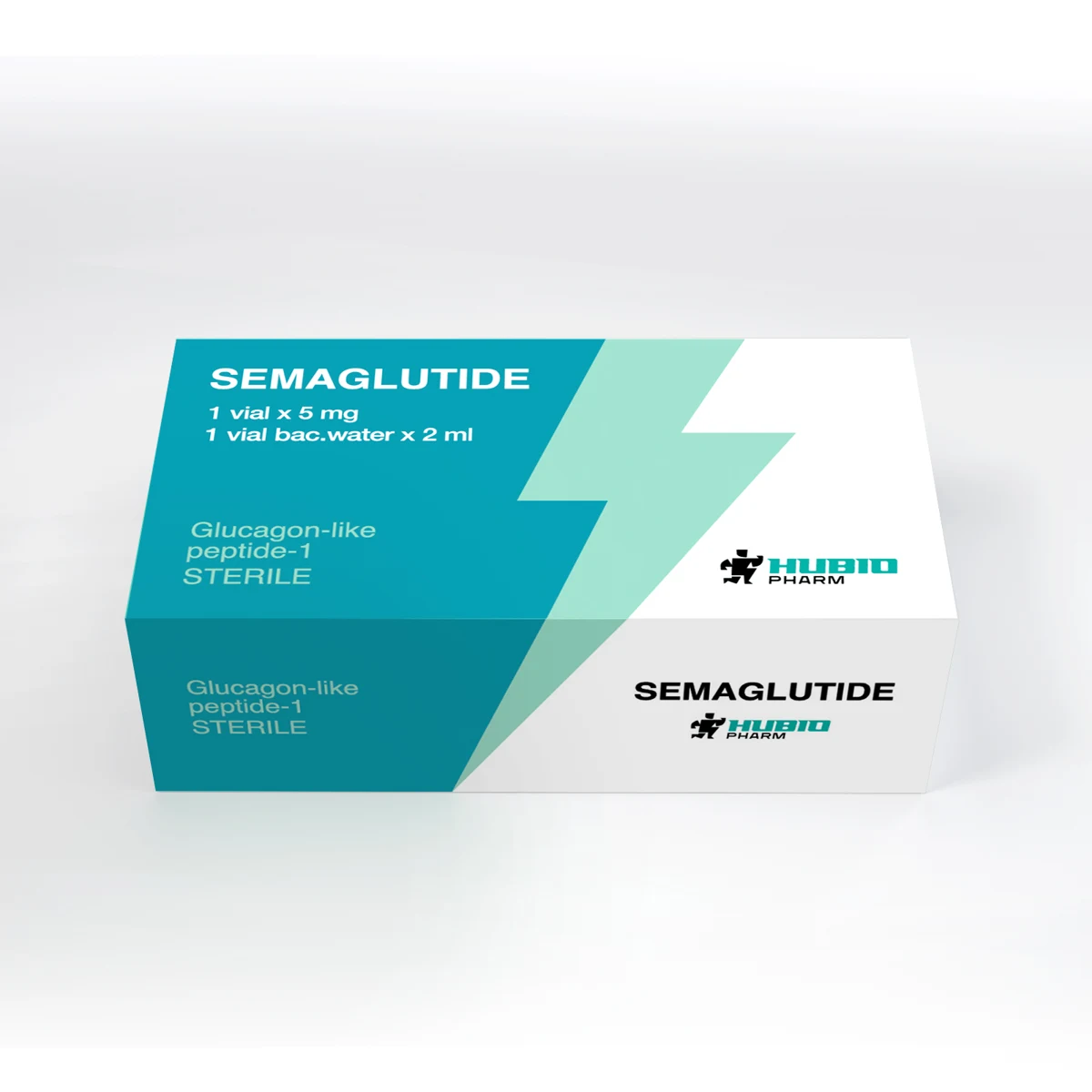
Some peptide catalogs list semaglutide in small vials, including products labeled with a total peptide quantity such as 5mg.
These presentations may use lyophilized powder rather than an already prepared liquid solution.
What Is Lyophilized Semaglutide?
Lyophilization is a freeze-drying process used to remove water from a formulation under controlled manufacturing conditions.
The resulting material is generally supplied as a dry powder.
Lyophilization may support the stability of certain peptide formulations, but actual stability must be established using formulation-specific evidence.
Understanding a Semaglutide 5mg Vial
A product labeled Semaglutide 5mg identifies a stated amount of peptide in the package.
It does not independently establish the identity, purity, concentration after preparation, sterility or suitability of the material for human administration.
A vial labeled 5mg should not be confused with a pre-filled pen designed to deliver a particular approved dose.
Research Peptide vs. Pharmaceutical Product
Research-grade peptide listings and approved pharmaceutical products are subject to different documentation, manufacturing and quality frameworks.
Clinical results obtained using approved semaglutide medicines cannot automatically be applied to independently marketed peptide vials.
When reviewing catalog items, distinguish the stated peptide content from verified finished-product characteristics.
Comparing Semaglutide Product Presentations
The main semaglutide formats differ in their physical presentation, delivery technology and available clinical evidence.
| Feature | Injection Pen | Oral Tablet | Peptide Vial |
|---|---|---|---|
| Physical form | Liquid | Solid tablet | Often dry powder |
| Presentation | Pre-filled device | Oral dosage form | Vial |
| Example | Wegovy injection | Wegovy tablet | Semaglutide 5mg powder listing |
| Clinical evidence | Product-specific trials | Product-specific trials | Cannot be assumed |
| Administration | Subcutaneous | Oral | Depends on product; not established by vial label |
| Quality verification | Approved product controls | Approved product controls | Requires independent evaluation |
The physical form alone does not determine effectiveness. Pharmaceutical formulation, bioavailability, manufacturing quality and controlled clinical evidence are important when evaluating semaglutide products.
Semaglutide Safety and Tolerability
Semaglutide can cause adverse reactions, and treatment decisions require consideration of the individual's medical history and the specific product labeling.
Commonly Reported Adverse Effects
- Nausea
- Vomiting
- Diarrhea
- Constipation
- Abdominal discomfort
Additional clinically important concerns include pancreatitis, gallbladder disease, dehydration-related kidney injury and hypoglycemia when used with certain glucose-lowering medicines.
Approved semaglutide products also carry important contraindications and warnings, including a boxed warning regarding thyroid C-cell tumors observed in rodents. They are contraindicated in people with a personal or family history of medullary thyroid carcinoma or multiple endocrine neoplasia syndrome type 2.
Why Product Format Matters for Safety
Unapproved or compounded semaglutide formulations may involve additional risks associated with concentration, preparation, labeling and medication errors.
The FDA has reported serious dosing errors involving some compounded semaglutide vials, including cases requiring hospitalization.
These concerns reinforce why product format and documented quality should not be treated as secondary considerations.
Semaglutide Packaging and Product Documentation
Accurate product identification requires examining the exact presentation rather than relying only on the word semaglutide.
Important Documentation Details
- Complete product and formulation name
- Declared active ingredient and chemical form
- Stated quantity in milligrams
- Physical presentation and container type
- Manufacturer information
- Batch or lot identification
- Expiration and storage information
- Available sample-specific analytical documentation
Semaglutide Base and Salt Forms
Some marketed formulations have been described as containing semaglutide sodium or semaglutide acetate.
These salt forms are different from the semaglutide active ingredient used in FDA-approved products. Equivalent chemical characteristics, pharmacological properties or clinical results should not be assumed.
Interpreting Laboratory Reports
A certificate of analysis or historical laboratory report must be connected to the exact sample or batch tested.
A report identifying peptide purity does not necessarily establish sterility, correct formulation, clinical suitability or equivalence to an approved drug.
Documentation for one semaglutide product should not be used to certify a different product or batch.
Frequently Asked Questions About Semaglutide
What is semaglutide?
Semaglutide is a GLP-1 receptor agonist used in certain prescription medicines for diabetes, weight management and other approved indications.
How does semaglutide support weight management?
Semaglutide acts on GLP-1 receptors involved in appetite regulation, satiety and glucose metabolism. Clinical studies have demonstrated reduced energy intake and significant average weight reduction with specific formulations.
How effective is semaglutide for weight loss?
In the STEP 1 trial, participants receiving weekly semaglutide 2.4mg had an average weight reduction of approximately 14.9% after 68 weeks, compared with 2.4% with placebo. Individual responses vary.
Is semaglutide available as an injection?
Yes. Approved semaglutide medicines include injectable formulations supplied in pre-filled pen devices.
Is oral semaglutide available?
Yes. Oral semaglutide medicines include Rybelsus and Wegovy tablets, with different approved indications and formulation characteristics.
What is a semaglutide 5mg vial?
A Semaglutide 5mg vial is a product presentation labeled with a total peptide quantity of 5mg. The label alone does not establish pharmaceutical quality, approved use or equivalence to an injection pen.
Is semaglutide a peptide?
Yes. Semaglutide is a modified peptide designed to activate GLP-1 receptors and provide prolonged pharmacological activity.
Is semaglutide the same as Ozempic?
Semaglutide is the active ingredient in Ozempic. Ozempic is a specific branded pharmaceutical product with its own approved indications and formulation.
What is the difference between Wegovy and Ozempic?
Both contain semaglutide, but they differ in approved indications, available strengths and product labeling.
Is lyophilized semaglutide equivalent to Wegovy?
No. A lyophilized peptide listing cannot be assumed to have the same manufacturing quality, bioavailability, safety or clinical effectiveness as an approved Wegovy product.
Are clinical trial results applicable to every semaglutide product?
No. Clinical evidence applies to the formulations and conditions investigated. Products with different manufacturing processes or formulations require their own supporting evidence.
Can semaglutide cause adverse effects?
Yes. Common adverse reactions include gastrointestinal symptoms, while more serious risks and contraindications are described in the prescribing information for approved products.
Conclusion: Semaglutide Evidence and Product Formats
Semaglutide is an extensively studied GLP-1 receptor agonist with demonstrated effects on weight management and metabolic health.
Clinical trials have established important benefits for specific approved formulations, including meaningful average weight reduction and cardiovascular risk reduction in defined populations.
However, the term semaglutide covers different product presentations, from injection pens and oral tablets to independently marketed peptide vials.
These differences are important because a shared active ingredient name does not establish identical formulation, quality, bioavailability or clinical evidence.
When comparing semaglutide products, accurate identification, product-specific documentation and the distinction between clinical research and catalog presentation provide the most reliable foundation for understanding the available formats.