HGH Fragment 176-191 Results: Fat Loss, Body Composition and Scientific Evidence
HGH Fragment 176-191 results are frequently discussed in peptide research, fat metabolism, weight management, and bodybuilding communities. This synthetic peptide represents a small segment of the human growth hormone (HGH) molecule and has attracted interest because of experimental research involving lipid metabolism.
Online descriptions often associate HGH Fragment 176-191 with fat burning, reduced body fat, improved body composition, and preservation of lean muscle mass. However, these claims should be distinguished from outcomes demonstrated in controlled human clinical trials.
Current scientific evidence remains limited. Much of the research involves laboratory experiments and animal models, while a closely related compound, AOD-9604, has been evaluated in human weight-loss studies.
This article examines HGH Fragment 176-191 research results, proposed mechanisms, fat loss claims, body composition effects, comparisons with AOD-9604, and important safety considerations.
What Is HGH Fragment 176-191?
HGH Fragment 176-191 is a synthetic peptide corresponding to amino acid residues 176 through 191 of the human growth hormone molecule.
Full-length human growth hormone contains 191 amino acids and regulates numerous physiological processes, including growth, metabolism, and IGF-1 production.
Researchers have investigated shorter portions of the HGH molecule to determine whether specific biological functions can be separated from the broader effects of the complete hormone.
The C-terminal region of growth hormone has been studied for possible effects on lipid metabolism and fat storage.
HGH Fragment 176-191 vs Full-Length HGH
Full-length HGH binds to growth hormone receptors and activates signaling pathways involved in growth, metabolism, and IGF-1 production.
HGH Fragment 176-191 represents only a small portion of this hormone and should not be assumed to reproduce the same physiological activity.
Claims that this fragment selectively affects fat metabolism without other hormonal effects remain insufficiently validated in humans.
How Does HGH Fragment 176-191 Work?
The proposed activity of HGH Fragment 176-191 is associated with experimental studies of lipid metabolism.
Researchers have examined whether growth hormone-derived fragments can influence fat storage and mobilization independently of the full hormone's growth-related actions.
Lipolysis and Fat Metabolism
Lipolysis is the process through which stored triglycerides are broken down into fatty acids and glycerol.
Some experimental studies involving growth hormone-derived peptides have investigated effects on lipid mobilization and fat-cell metabolism.
However, findings have varied between fragments and experimental models, and increased lipolytic activity in a laboratory setting does not necessarily translate into measurable body fat reduction in humans.
Lipogenesis and Fat Storage
Lipogenesis refers to processes involved in the synthesis and storage of fat.
Some early investigations of C-terminal growth hormone fragments reported changes in fat-storage pathways in animal models.
These findings provided a scientific rationale for further research but did not establish a clinically effective weight-loss treatment.
HGH Fragment and IGF-1
Full-length HGH stimulates IGF-1 production through growth hormone receptor signaling.
HGH Fragment 176-191 has been investigated as a distinct peptide, but its human endocrine effects have not been adequately characterized.
It should not be assumed that the fragment has no effect on blood glucose, insulin signaling, or other metabolic pathways.
HGH Fragment 176-191 Fat Loss Results
Fat loss is the most frequently discussed potential effect of HGH Fragment 176-191.
However, the available evidence must be separated into preclinical research, human clinical research, and anecdotal experiences.
Animal Research Results
Preclinical studies involving HGH-derived peptides have reported changes in fat metabolism and weight gain in certain rodent models.
Research involving the related compound AOD-9604 has also demonstrated metabolic effects in experimental animals.
These results suggest that the C-terminal region of growth hormone is scientifically relevant to lipid metabolism.
However, animal results do not establish the effectiveness of HGH Fragment 176-191 for fat loss in humans.
Human Fat Loss Results
No adequately documented controlled human clinical trial has established clinically meaningful fat loss from the unmodified HGH Fragment 176-191 peptide.
Most human research frequently cited in discussions of this fragment actually concerns AOD-9604, a closely related but chemically distinct compound.
It is therefore inaccurate to present AOD-9604 clinical trial outcomes as direct evidence of HGH Fragment 176-191 effectiveness.
Does HGH Fragment 176-191 Reduce Belly Fat?
Claims about selective abdominal or visceral fat reduction are not supported by reliable human clinical evidence for HGH Fragment 176-191.
Laboratory observations concerning fat metabolism cannot establish targeted body fat reduction.
There is currently no validated clinical evidence showing that the peptide specifically reduces belly fat in humans.
HGH Fragment 176-191 vs AOD-9604 Results
HGH Fragment 176-191 and AOD-9604 are frequently discussed together, but they should not be treated as interchangeable compounds.
Structural Differences
HGH Fragment 176-191 corresponds to amino acids 176 through 191 of human growth hormone.
AOD-9604 is a modified C-terminal growth hormone-derived peptide containing an N-terminal tyrosine followed by residues 177 through 191.
This difference matters because chemical structure may influence biological activity, stability, and pharmacological behavior.
AOD-9604 Human Clinical Trials
AOD-9604 underwent clinical investigation as a potential treatment for obesity.
One of its largest studies was the Phase 2b OPTIONS trial, which enrolled 536 adults with obesity and randomized 502 participants.
The study evaluated oral AOD-9604 against placebo over 24 weeks alongside a structured diet and exercise program.
According to the development program's reported results, weight loss differences between AOD-9604 and placebo did not achieve statistical significance at the primary 12-week or secondary 24-week endpoints.
Following these findings, development of AOD-9604 for obesity was discontinued in 2007.
What Do These Findings Mean for HGH Fragment 176-191?
The AOD-9604 results demonstrate that promising preclinical findings involving a related growth hormone fragment did not translate into clinically meaningful weight-loss efficacy in a major human trial.
However, because the two compounds are not identical, these results cannot definitively establish the effectiveness or ineffectiveness of unmodified HGH Fragment 176-191.
HGH Fragment 176-191 vs AOD-9604: Research Comparison
| Feature | HGH Fragment 176-191 | AOD-9604 |
|---|---|---|
| Peptide type | HGH residues 176-191 | Modified HGH-derived fragment |
| Primary research interest | Lipid metabolism | Obesity and lipid metabolism |
| Preclinical research | Limited experimental evidence | Animal and laboratory studies |
| Controlled human weight-loss trials | No established clinical results | Human trials conducted |
| Demonstrated human fat loss | Not established | Major trial did not show significant benefit |
| Muscle preservation | Not established | Not established as a clinical benefit |
| Long-term human safety | Unknown | Insufficient for general clinical use |
HGH Fragment 176-191 and Body Composition
Body composition describes the relative amounts of fat mass, lean tissue, and other components of total body weight.
HGH Fragment 176-191 is often discussed in relation to improving body composition through reduced body fat.
However, the peptide has not been shown in adequate human trials to produce clinically meaningful changes in fat mass or lean body mass.
Does HGH Fragment Preserve Muscle?
Some online descriptions suggest that HGH Fragment 176-191 may support fat reduction without affecting skeletal muscle.
However, human clinical evidence establishing muscle preservation during weight loss is unavailable.
Does HGH Fragment Increase Muscle Growth?
HGH Fragment 176-191 should not be confused with full-length recombinant human growth hormone.
It has not been demonstrated to produce meaningful muscle hypertrophy or strength improvements in humans.
HGH Fragment 176-191 Before and After Results
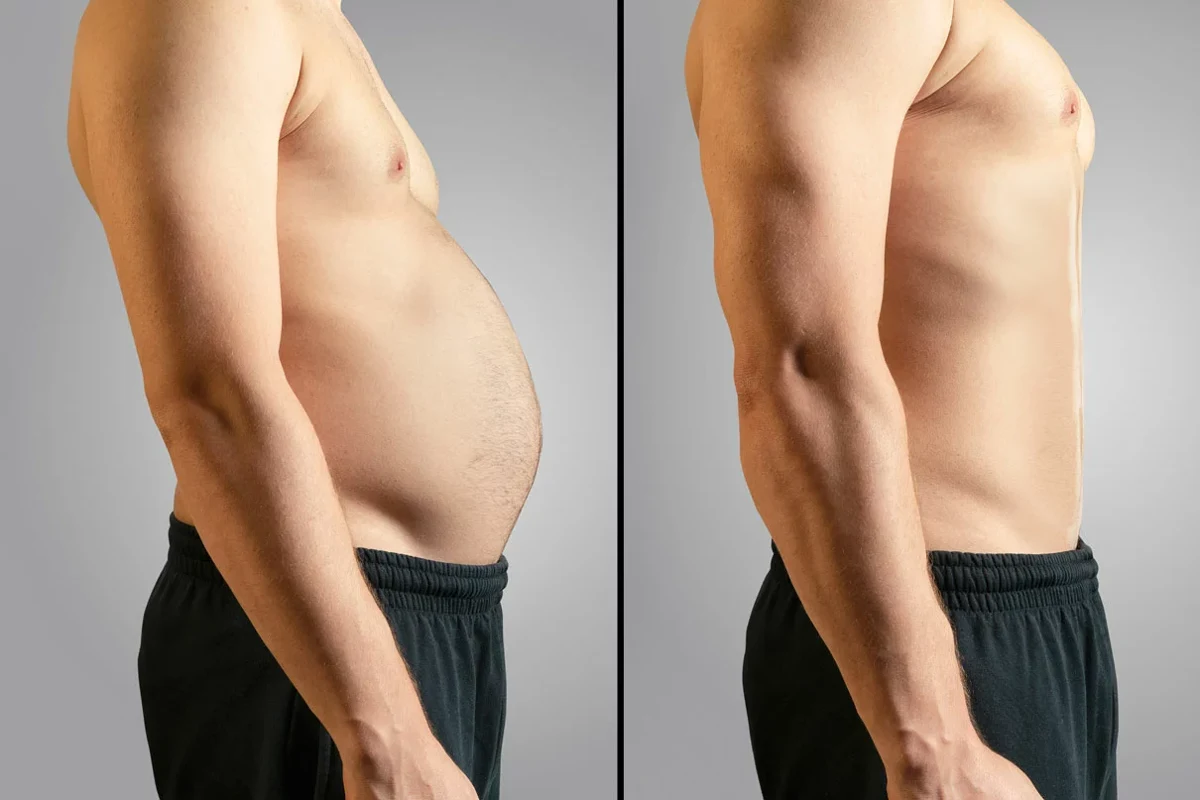
Online discussions may contain before-and-after photographs and testimonials describing changes in physical appearance.
However, these accounts generally lack objective body composition testing, verified product identity, and appropriate comparison groups.
Factors that can affect reported results include:
- Changes in calorie intake
- Resistance training and aerobic exercise
- Changes in body water
- Other supplements or medications
- Natural weight fluctuations
- Differences in photographic conditions
- Selective publication of favorable outcomes
Before-and-after photographs cannot establish that HGH Fragment 176-191 caused a reduction in body fat.
HGH Fragment 176-191 Results Timeline
Searches for HGH Fragment 176-191 results after two weeks, four weeks, eight weeks, or several months are common.
However, no validated human research establishes a predictable timeline of fat loss or body composition changes from this peptide.
| Time Period | Evidence-Based Conclusion |
|---|---|
| 1-2 weeks | No established human fat-loss outcomes |
| 4 weeks | No validated average weight-loss result |
| 8-12 weeks | No reliable clinical efficacy benchmark |
| 24 weeks | Related AOD-9604 did not significantly outperform placebo in its major trial |
| Long-term | Human effectiveness and safety remain unknown |
These time periods are included to explain evidence limitations, not to suggest a treatment schedule.
HGH Fragment 176-191 Side Effects and Safety
The human safety profile of HGH Fragment 176-191 has not been adequately established.
Unlike approved pharmaceutical medications, the fragment lacks comprehensive clinical data defining adverse-effect frequencies, drug interactions, contraindications, and long-term outcomes.
Potential Safety Concerns
- Unknown long-term biological effects
- Uncharacterized effects on glucose and insulin regulation
- Possible immune or hypersensitivity reactions
- Uncertain interactions with other medications
- Incorrect peptide identity or concentration
- Contamination and formulation-related risks
Although related growth hormone fragments have been studied experimentally, their findings do not establish that HGH Fragment 176-191 is safe for human administration.
Does HGH Fragment Affect Blood Sugar?
Some early animal experiments involving C-terminal growth hormone fragments reported effects on glucose or insulin physiology.
Therefore, statements claiming that HGH Fragment 176-191 has no effect on blood glucose should not be considered clinically established.
HGH Fragment 176-191 Research Products and Documentation
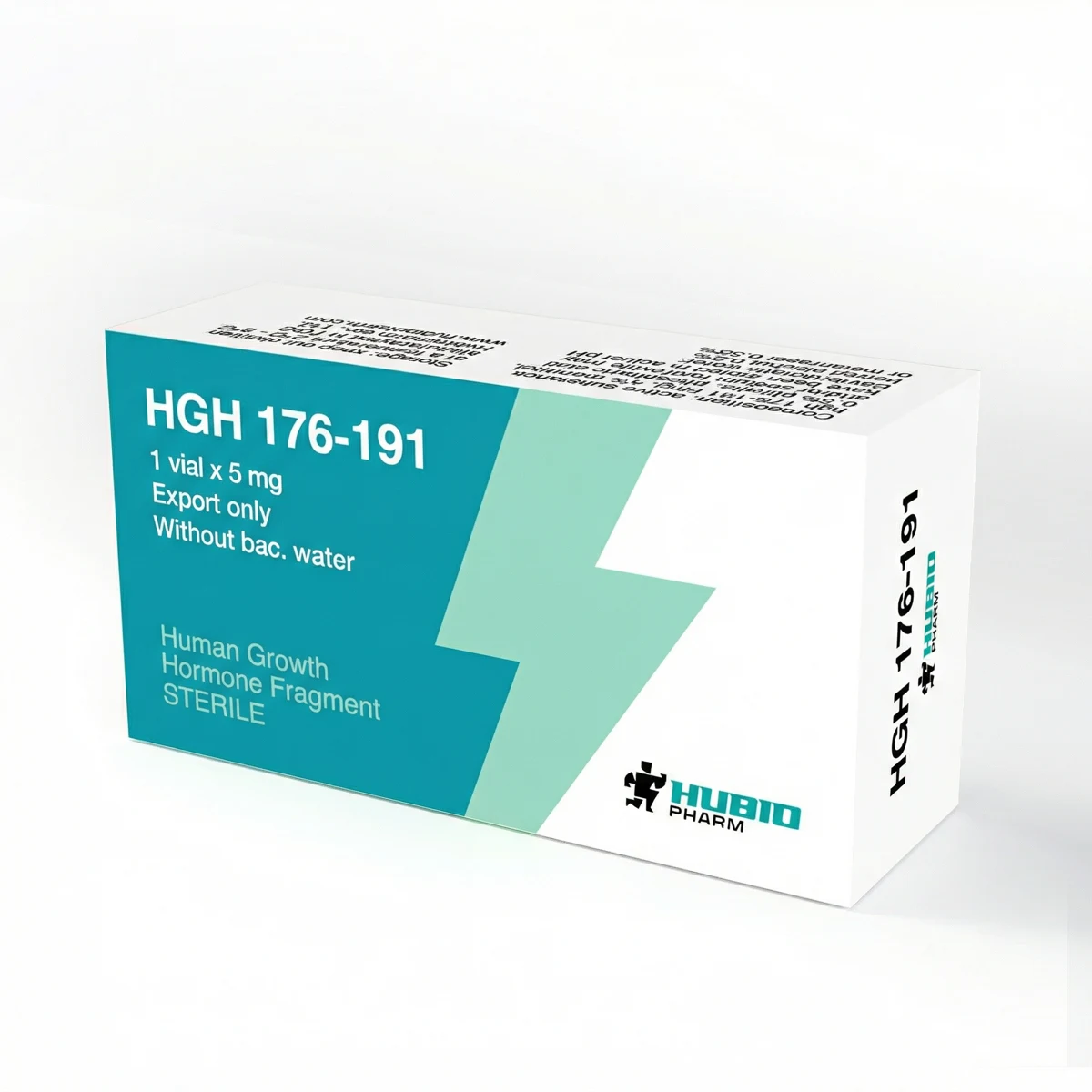
HGH Fragment 176-191 may appear in research peptide catalogs under different names and nominal quantities.
These include labels such as HGH Frag 176-191 or HGH Fragment 176-191 Peptide.
Product Identity
Peptide names in online catalogs do not independently establish the actual chemical identity of the contents.
Because HGH Fragment 176-191 and AOD-9604 have closely related structures, precise sequence identification is especially important in laboratory research.
Laboratory Documentation
Research documentation may identify:
- Peptide name and amino acid sequence
- Nominal peptide quantity
- Lot or batch number
- Analytical purity
- Identity testing methods
- Laboratory issuing the report
- Storage and handling specifications
A Certificate of Analysis may support evaluation of a particular tested sample but does not establish clinical effectiveness or suitability for human administration.
Research Quantity vs Clinical Dose
A product labeled 5mg or another quantity describes its claimed total peptide content.
It does not represent an established human dose or a clinically validated treatment protocol.
HGH Fragment 176-191 Results: Claims vs Scientific Evidence
| Common Claim | Evidence Status |
|---|---|
| Increases fat breakdown | Investigated in preclinical models |
| Reduces total body fat | Not established in human trials |
| Targets abdominal fat | No reliable human evidence |
| Preserves lean muscle | Not clinically established |
| Improves muscle strength | Not demonstrated |
| Produces visible results in 4 weeks | No validated timeline |
| Has no effect on blood glucose | Not established in humans |
| Is equivalent to AOD-9604 | Chemically related but not identical |
| Has proven long-term safety | Insufficient human evidence |
Frequently Asked Questions About HGH Fragment 176-191 Results
Does HGH Fragment 176-191 really work for fat loss?
There is insufficient human clinical evidence to establish that HGH Fragment 176-191 produces meaningful fat loss. Most supporting claims are based on preclinical research or studies involving related compounds.
What results can HGH Fragment 176-191 produce?
Experimental research has investigated effects on lipid metabolism, but reliable human outcomes involving weight loss, body fat reduction, or muscle preservation have not been established.
Does HGH Fragment 176-191 burn belly fat?
No controlled human evidence demonstrates that HGH Fragment 176-191 selectively reduces abdominal or visceral fat.
How long does HGH Fragment 176-191 take to show results?
There is no scientifically validated timeline for human fat-loss results from HGH Fragment 176-191.
Is HGH Fragment 176-191 the same as AOD-9604?
No. AOD-9604 is a closely related modified growth hormone-derived peptide. The two compounds differ in their N-terminal amino acid sequence.
Did AOD-9604 work in human weight-loss trials?
Its major Phase 2b OPTIONS study did not demonstrate statistically significant weight-loss benefits compared with placebo at the main evaluated endpoints.
Does HGH Fragment 176-191 preserve muscle mass?
Human clinical research has not established that the peptide preserves lean muscle during weight loss.
Does HGH Fragment increase muscle growth?
There is no reliable human evidence demonstrating meaningful muscle hypertrophy or strength improvements from HGH Fragment 176-191.
Does HGH Fragment 176-191 affect IGF-1?
Its effects on circulating IGF-1 in humans have not been adequately characterized. It should not be assumed to act identically to full-length HGH.
What are the side effects of HGH Fragment 176-191?
Reliable human safety data are insufficient to determine the frequency or severity of potential adverse effects. Product quality and immune-related risks remain additional concerns.
Are HGH Fragment 176-191 before-and-after photos reliable?
Photographs and testimonials cannot establish causation because changes in diet, exercise, hydration, and other factors may influence appearance.
Is HGH Fragment 176-191 approved for weight loss?
No. HGH Fragment 176-191 is not an approved weight-loss medication in the United States.
Can HGH Fragment 176-191 be used in competitive sports?
HGH-derived fragments, including hGH 176-191, are prohibited under World Anti-Doping Agency rules.
Conclusion: What Do HGH Fragment 176-191 Results Really Show?
HGH Fragment 176-191 is an experimental peptide derived from the C-terminal region of human growth hormone.
Its scientific interest is primarily associated with laboratory investigations of lipid metabolism and related biological pathways.
Although certain preclinical studies have produced results of scientific interest, reliable human clinical evidence demonstrating meaningful fat loss, improved muscle preservation, or better body composition is lacking.
The related compound AOD-9604 underwent human obesity trials, but its major 24-week study failed to demonstrate statistically significant weight-loss benefits compared with placebo.
Current scientific evidence does not establish HGH Fragment 176-191 as a safe or effective method for human fat loss, bodybuilding, or weight management.
Future controlled human studies would be necessary to determine its clinical effects, appropriate safety profile, and potential therapeutic relevance.
Scientific References and Research Resources
- U.S. Food and Drug Administration. AOD-9604: Scientific Review for the Pharmacy Compounding Advisory Committee. Read FDA scientific review .
- U.S. Food and Drug Administration. Pharmacy Compounding Advisory Committee Meeting, December 4, 2024. Read clinical evidence discussion .
- The Emerging Landscape of Performance-Enhancing Peptides Modulating the GH-IGF1 Axis: Bridging the Gap Between Clinical Evidence and Patient Self-Administration. Read scientific review .
- ClinicalTrials.gov. Clinical Research Registry. Search clinical studies .
- World Anti-Doping Agency. Prohibited List. View anti-doping information .
Medical Disclaimer: This article is provided for scientific and educational purposes only. HGH Fragment 176-191 is an investigational peptide without established human efficacy or safety for weight management. This information does not constitute medical advice or recommend human administration.