


- Overview
- Product Specifications
- What Is HGH Frag 176-191?
- Mechanism of Interest in Research
- Lyophilized Format & Stability
- Research Applications
- Quality Control & Testing
- Regulatory & Safety Notice
- FAQ — HGH Frag 176-191 (Research Peptide)
- What is HGH Frag 176-191 used for?
- Is HGH Fragment 176-191 approved for human use?
- What does “research use only” mean?
- Is HGH Frag 176-191 the same as full human growth hormone?
- Why do researchers study HGH Fragment 176-191?
- What purity level is typical for HGH Frag 176-191 peptides?
- How should HGH Frag 176-191 be stored?
- What form is HGH Frag 176-191 typically supplied in?
- What does a Certificate of Analysis (COA) include?
- Does HGH Fragment 176-191 require special handling?
- What type of laboratories commonly work with peptides like HGH Frag 176-191?
- Research Feedback
Overview
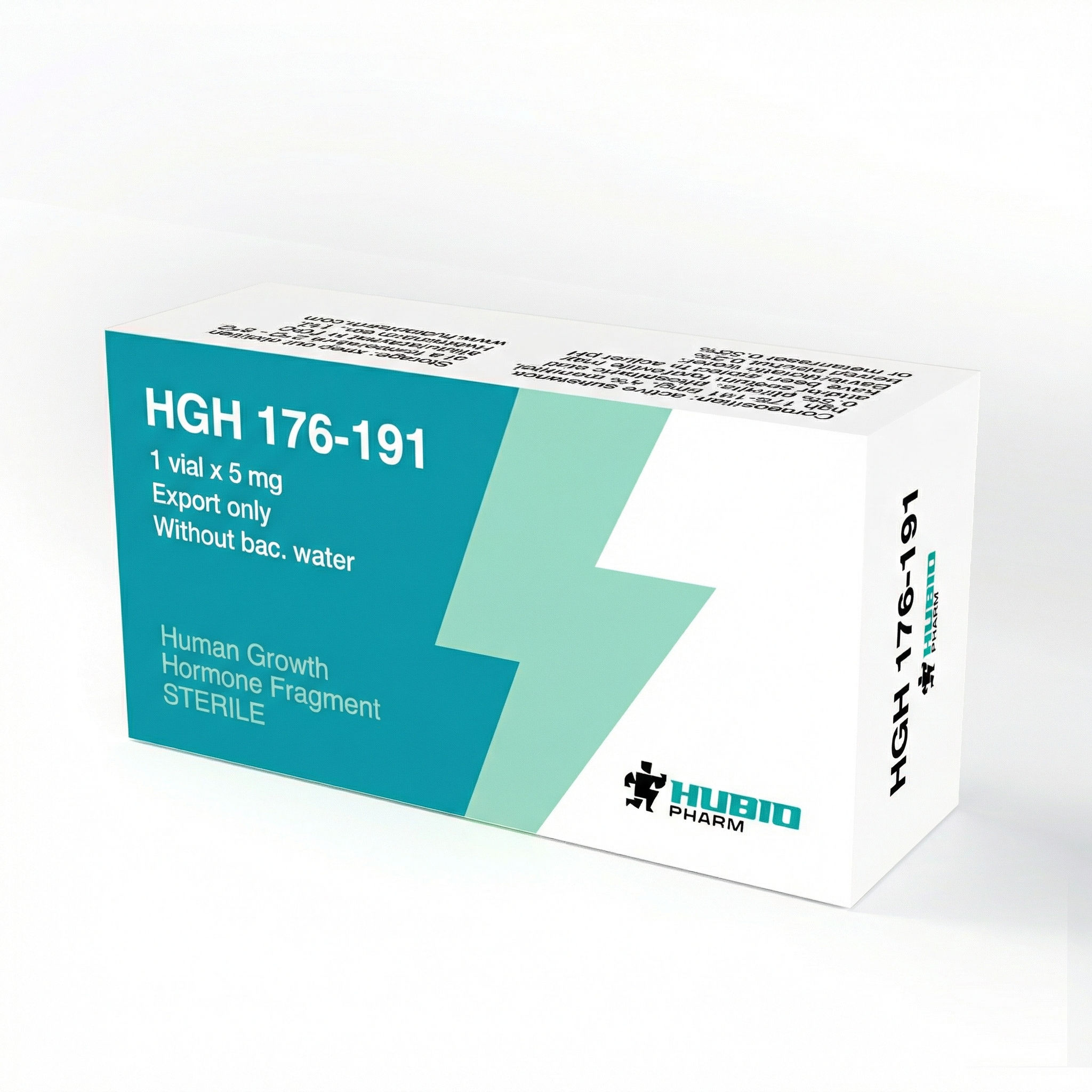
HGH Frag 176-191 is a synthetic peptide fragment derived from amino acids 176–191 of the human growth hormone (HGH) molecular structure. This peptide segment has been studied in controlled laboratory research environments for its potential involvement in metabolic signaling modulation and lipid metabolism pathway investigation.
This product contains 5 mg of high-purity lyophilized HGH Fragment 176-191 peptide, manufactured exclusively for scientific laboratory research purposes. The formulation is designed for experimental peptide studies focusing on biochemical structure analysis and metabolic interaction research.
HGH Fragment 176-191 is primarily utilized in controlled research settings exploring lipolytic activity mechanisms and peptide signaling behavior within cellular models. Due to regulatory and safety standards, this product is strictly limited to laboratory research applications.
Proper peptide storage conditions, handling procedures, and laboratory safety protocols should always be followed. This peptide is not approved for human, veterinary, therapeutic, cosmetic, or nutritional use.
Product Specifications
- Product Name: HGH Frag 176-191
- Quantity: 5 mg per vial
- Form: Lyophilized powder
- Purity: ≥98% (HPLC tested)
- Molecular Type: Synthetic peptide fragment of human growth hormone
- Sequence Range: Amino acids 176–191
- Intended Use: Research purposes only
What Is HGH Frag 176-191?
HGH Frag 176-191 is a short-chain peptide derived from the C-terminal region of the full human growth hormone molecule. Unlike full-length somatropin, this fragment does not replicate the entire biological activity of HGH but has been investigated in experimental models for selective metabolic pathway interactions.
Researchers study this fragment because certain segments of larger hormones may exhibit targeted receptor or signaling activity independent of the complete molecule.
Mechanism of Interest in Research
In laboratory studies, HGH Fragment 176-191 has been examined for its role in:
- Lipolytic signaling models
- Fat metabolism pathway research
- cAMP-mediated cellular responses
- Hormone-receptor interaction assays
- Metabolic regulatory pathway modeling
These studies are conducted under controlled in vitro and preclinical research conditions.
Lyophilized Format & Stability
HGH Frag 176-191 is supplied as a freeze-dried (lyophilized) powder to preserve structural stability and reduce degradation risk during transport.
Storage Recommendations:
- Short-term storage: 2–8°C
- Long-term storage: −20°C
- Protect from light and moisture
- Avoid repeated freeze-thaw cycles
Proper storage is essential to maintain peptide integrity for laboratory use.
Research Applications
HGH Frag 176-191 may be referenced in:
- Adipocyte research models
- Hormonal signaling pathway studies
- Metabolic regulation experiments
- Molecular biology assays
- Receptor-binding investigations
All applications must comply with institutional research standards and local regulations.
Quality Control & Testing
Each batch of laboratory-grade HGH Frag 176-191 typically undergoes:
- High-Performance Liquid Chromatography (HPLC) purity analysis
- Mass spectrometry confirmation
- Batch documentation and labeling verification
Researchers should consult the Certificate of Analysis (COA) for detailed purity and testing information.
Regulatory & Safety Notice
- Not approved by FDA, EMA, or other regulatory agencies
- Not intended for human or animal consumption
- Not a dietary supplement
- Not for cosmetic use
- For laboratory research use only
Handling should be performed by qualified laboratory professionals using appropriate safety procedures and protective equipment.
FAQ — HGH Frag 176-191 (Research Peptide)
What is HGH Frag 176-191 used for?
HGH Frag 176-191 is a synthetic peptide fragment derived from the C-terminal region of human growth hormone. In laboratory environments, researchers study this peptide to better understand metabolic signaling, lipolytic pathways, and peptide-receptor interactions. Scientific interest in HGH Fragment 176-191 focuses on how specific segments of the growth hormone molecule may influence cellular signaling mechanisms related to metabolism.
This compound is supplied strictly for research use only and is not approved for therapeutic, medical, or cosmetic applications.
Is HGH Fragment 176-191 approved for human use?
No. HGH Fragment 176-191 is not approved by regulatory authorities for human consumption or clinical treatment. It is distributed exclusively for scientific research and laboratory experimentation. Any use outside controlled research environments is not intended by manufacturers or suppliers.
What does “research use only” mean?
The label “research use only” indicates that the peptide is intended exclusively for laboratory and scientific experimentation. It is not designed or approved for ingestion, injection, topical use, or administration to humans or animals. Such compounds should only be handled by trained professionals within controlled laboratory settings.
Is HGH Frag 176-191 the same as full human growth hormone?
No. HGH Frag 176-191 represents only a small fragment of the complete human growth hormone molecule, specifically amino acids 176–191 from the C-terminal region.
Full-length human growth hormone (HGH) is a complex protein consisting of 191 amino acids, while HGH Fragment 176-191 contains only a small portion of that structure. Because of this structural difference, it is not the same compound as full recombinant HGH.
Why do researchers study HGH Fragment 176-191?
Scientists investigate HGH Fragment 176-191 to better understand peptide signaling pathways and metabolic regulation mechanisms. Studying isolated fragments of large hormone molecules helps researchers explore how individual peptide segments interact with cellular receptors, metabolic enzymes, and signaling pathways.
Such studies contribute to broader scientific knowledge regarding hormonal signaling, peptide structure-function relationships, and metabolic research models.
What purity level is typical for HGH Frag 176-191 peptides?
Laboratory-grade HGH Fragment 176-191 peptides are typically manufactured with purity levels of 98% or higher. Purity is commonly verified using High-Performance Liquid Chromatography (HPLC) and sometimes confirmed with Mass Spectrometry (MS) analysis.
Each production batch usually includes a Certificate of Analysis (COA) documenting purity levels, peptide identity, and analytical testing results.
How should HGH Frag 176-191 be stored?
To maintain peptide stability and research integrity:
- Short-term storage: 2–8°C (refrigeration)
- Long-term storage: −20°C in a laboratory freezer
- Protection: Keep away from moisture, heat, and direct light exposure
Proper storage helps preserve peptide stability, structural integrity, and research consistency.
What form is HGH Frag 176-191 typically supplied in?
HGH Fragment 176-191 is usually supplied as a lyophilized (freeze-dried) peptide powder. Lyophilization removes moisture and helps stabilize the peptide during storage and shipping. This format allows research laboratories to maintain long shelf life and reliable peptide integrity under appropriate storage conditions.
What does a Certificate of Analysis (COA) include?
A Certificate of Analysis (COA) typically includes detailed laboratory testing data such as:
- Peptide identity verification
- Purity percentage (HPLC results)
- Analytical chromatograms
- Molecular weight confirmation
- Batch number and production details
Reviewing the COA ensures the peptide meets laboratory research quality standards.
Does HGH Fragment 176-191 require special handling?
Yes. HGH Frag 176-191 should be handled only by trained laboratory professionals following established research safety protocols. Standard laboratory practices such as controlled environments, proper labeling, and appropriate protective equipment should always be used.
What type of laboratories commonly work with peptides like HGH Frag 176-191?
Peptides such as HGH Fragment 176-191 are typically studied in:
- biochemistry laboratories
- molecular biology research facilities
- pharmacology research environments
- peptide chemistry laboratories
These environments allow researchers to analyze peptide stability, receptor interaction, and biochemical signaling mechanisms under controlled scientific conditions.
Research Feedback
University Laboratory:
“Peptide purity matched analytical documentation and was suitable for in vitro metabolic pathway studies.”
Biochemistry Research Facility:
“Lyophilized material remained stable under recommended storage conditions.”
Independent Testing Lab:
“Documentation and labeling met laboratory-grade material standards.”
Explore Our Research Peptides Collection
Discover a wide range of laboratory-grade research peptides used in modern biochemical and molecular research. Our catalog includes well-known peptide compounds studied in research environments such as Melanotan II, HGH Fragment 176-191, CJC-1295, Ipamorelin, and Semaglutide.
All peptides are supplied as high-purity lyophilized powders and manufactured to meet strict laboratory quality standards. Researchers often study these compounds in projects related to metabolic signaling, receptor interaction, and peptide pathway research.
Browse the full category to explore available peptide compounds supplied exclusively for research use only.
View All Research Peptides →


Reviews
There are no reviews yet.