
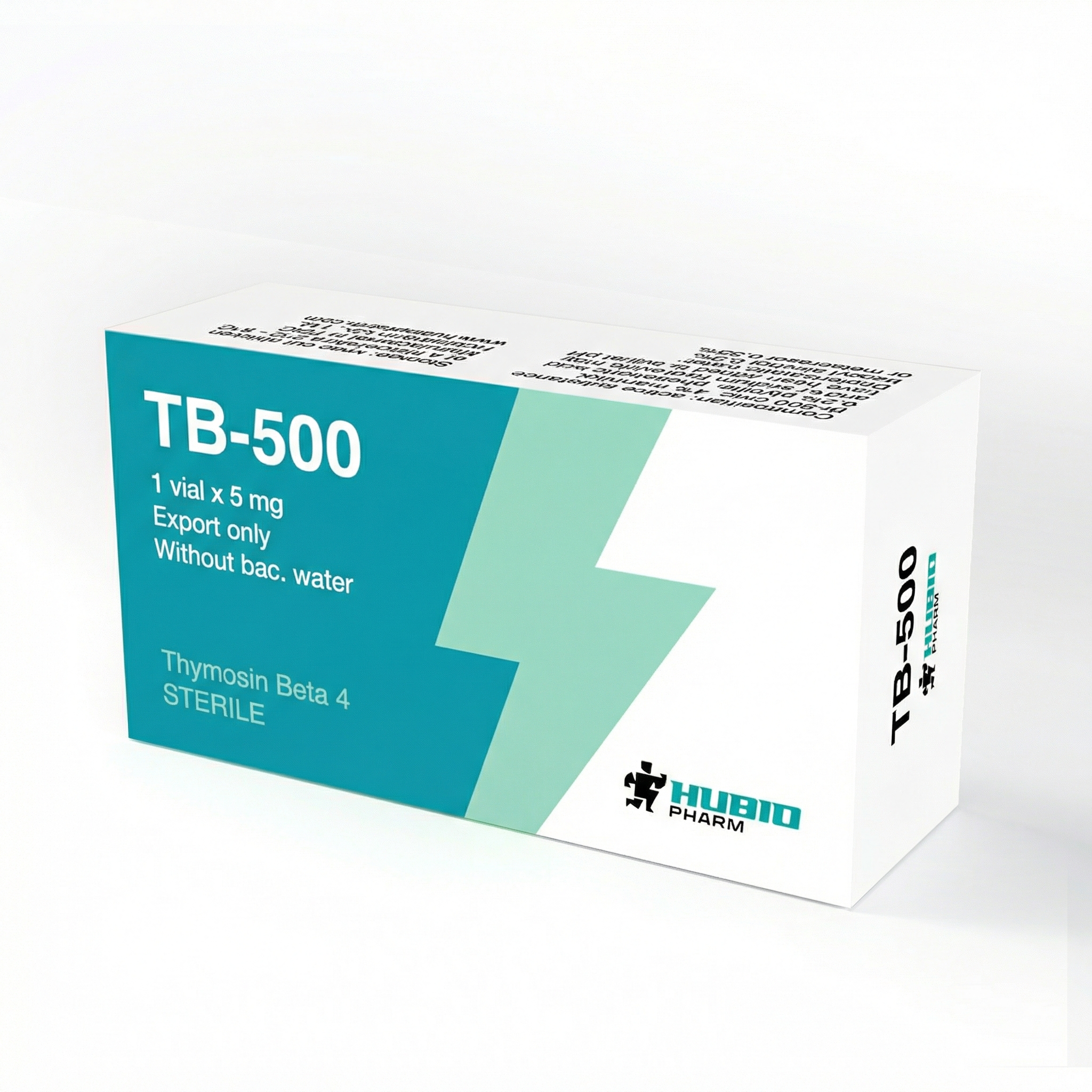


TB-500 overview
TB-500 (thymosin beta-4 fragment) is a research-grade synthetic peptide fragment derived from the naturally occurring protein thymosin beta-4 (Tβ4), which is present in multiple biological tissues. Scientific interest in TB-500 focuses on its potential role in cellular signaling mechanisms associated with cell migration, cytoskeletal structure regulation, and tissue repair research pathways.
This product provides 5 mg of high-purity lyophilized TB-500 peptide powder designed exclusively for laboratory and scientific research use. It is manufactured and quality-tested under controlled conditions to support experimental peptide studies and analytical applications.
TB-500 5 mg is not approved for human, veterinary, or clinical therapeutic use. The peptide should be handled according to laboratory safety standards and is intended only for professional research environments. Users must comply with local regulations regarding peptide research substances.
TB-500 Specifications
- Product Name: TB-500
- Quantity: 5 mg per vial
- Form: Lyophilized powder
- Purity: ≥98% (HPLC tested)
- Molecular Formula: C212H350N56O78S
- Sequence: Synthetic fragment of Thymosin Beta-4
- Intended Use: Research and laboratory applications only
What Is TB-500?
TB-500 is a synthetic peptide modeled after the active region of Thymosin Beta-4, a protein involved in actin binding and cellular structural regulation. In laboratory research, TB-500 is studied for its role in:
- Cell migration processes
- Cytoskeletal remodeling
- Tissue regeneration signaling
- Angiogenesis-related pathways
It is important to emphasize that these investigations are conducted in controlled research settings and do not represent approved medical uses.
Mechanism of Interest in Research
In scientific literature, Thymosin Beta-4–related peptides are studied for their influence on:
- Actin polymerization and depolymerization
- Cellular motility
- Wound-healing pathway modeling
- Inflammatory response modulation
- Vascular development signaling
Researchers explore how peptide fragments such as TB-500 interact with intracellular signaling mechanisms in vitro and in preclinical models.
Lyophilized Format & Stability
TB-500 is supplied as a lyophilized (freeze-dried) powder, which improves stability during transport and storage.
Storage Recommendations:
- Store at 2–8°C for short-term use
- Store at –20°C for long-term preservation
- Protect from moisture and repeated freeze-thaw cycles
- Keep away from direct light
Improper storage may compromise peptide integrity and experimental consistency.
Research Applications
TB-500 may be referenced in laboratory environments for studies involving:
- Cell culture assays
- Connective tissue research
- Molecular biology experiments
- Regenerative signaling pathway modeling
- Actin-binding protein research
All use must comply with institutional research guidelines and applicable regulations.
Quality Control & Testing
Each research-grade batch typically undergoes:
- High-Performance Liquid Chromatography (HPLC) purity testing
- Mass spectrometry analysis
- Batch documentation and labeling verification
Researchers should review the Certificate of Analysis (COA) for detailed batch-specific purity data.
Regulatory & Safety Notice
- Not approved by FDA, EMA, or other regulatory authorities for medical use
- Not intended for human consumption
- Not a dietary supplement
- Not for veterinary applications
- For laboratory research use only
Handling should be performed by qualified laboratory professionals using appropriate safety protocols and personal protective equipment (PPE).
Frequently Asked Questions about TB-500 (thymosin beta-4 fragment) 5 mg
What is TB-500 5 mg?
TB-500 is a synthetic peptide fragment derived from thymosin beta-4 protein research. It is widely discussed in scientific literature related to cellular repair signaling and tissue regeneration mechanisms. The 5 mg formulation is typically used in research and peptide handling contexts rather than for self-medication.
What is TB-500 used for?
Research publications and experimental discussions suggest that TB-500 may be associated with supporting natural recovery processes, inflammation pathway modulation, and structural tissue repair signaling. It is commonly referenced in studies involving muscle, tendon, and connective tissue biology.
How does TB-500 work?
TB-500 is believed to mimic functional regions of thymosin beta-4 related peptides. These molecular fragments are studied for their possible role in actin regulation, which is important for cell migration, wound response, and tissue remodeling processes.
Is TB-500 5 mg safe to use?
There is limited large-scale human clinical safety data regarding TB-500 peptide research compounds. Individual tolerance, health condition, and dosage protocols can influence risk levels. Professional medical consultation is strongly recommended before considering any peptide product.
How is TB-500 administered?
In research environments, TB-500 is often discussed in injectable peptide preparation after proper reconstitution. However, administration method, dosage schedule, and handling technique should be determined only by qualified healthcare or scientific professionals.
What are the potential research benefits of TB-500?
Scientific interest in TB-500 focuses mainly on biological recovery pathways. Topics of study include cellular migration support, inflammatory response regulation, and possible tissue repair signaling effects. These outcomes are still under ongoing investigation.
How long does it take to see effects?
Biological response to peptides varies significantly depending on metabolic condition, research protocol, and physiological factors. There is no guaranteed timeframe for observable results.
Can TB-500 be combined with other peptides?
Peptide combination strategies are sometimes discussed in experimental research, but interaction effects between compounds are not fully established. Always consult a qualified specialist before considering any combination therapy.
What is inside the TB-500 5 mg package?
The product usually contains 5 mg of lyophilized peptide powder that requires proper scientific handling, storage, and reconstitution if used in laboratory research environments.
How should TB-500 be stored?
Peptide compounds are typically stored in a cool and dry environment. After reconstitution, refrigeration is often recommended to maintain peptide stability. Follow manufacturer or laboratory guidelines.
Who should avoid TB-500?
Individuals with chronic illnesses, pregnant or breastfeeding women, and people undergoing medical treatment should avoid experimental peptides unless explicitly cleared by a healthcare professional.
Is TB-500 legally sold?
Regulatory status depends on national legislation. In many countries, peptide research substances are controlled or restricted products. Buyers should verify local legal requirements.
Does TB-500 require prescription?
In many jurisdictions, peptide-based research compounds are treated as controlled or prescription-related substances, and medical supervision is strongly advised.
Where can I buy TB-500 5 mg?
Specialized peptide research stores and compliance-oriented supplement platforms may offer this product, subject to regional regulations.


Reviews
There are no reviews yet.