


- Overview
- Product Specifications
- What Is IGF-1 LR3?
- Mechanism of Interest in Research
- Structural Characteristics
- Storage & Stability
- Research Applications
- Quality Control & Testing
- Regulatory & Safety Notice
- Frequently Asked Questions (FAQ)
- What is IGF-1 LR3?
- Is IGF-1 LR3 approved for human use?
- What is the difference between IGF-1 and IGF-1 LR3?
- What is IGF-1 LR3 used for in research?
- Is IGF-1 LR3 a dietary supplement?
- How should IGF-1 LR3 be stored?
- What does “lyophilized” mean?
- What purity level is typical for IGF-1 LR3 research material?
- Does IGF-1 LR3 require special handling?
- Is IGF-1 LR3 regulated?
- Can IGF-1 LR3 be used in animals?
Overview
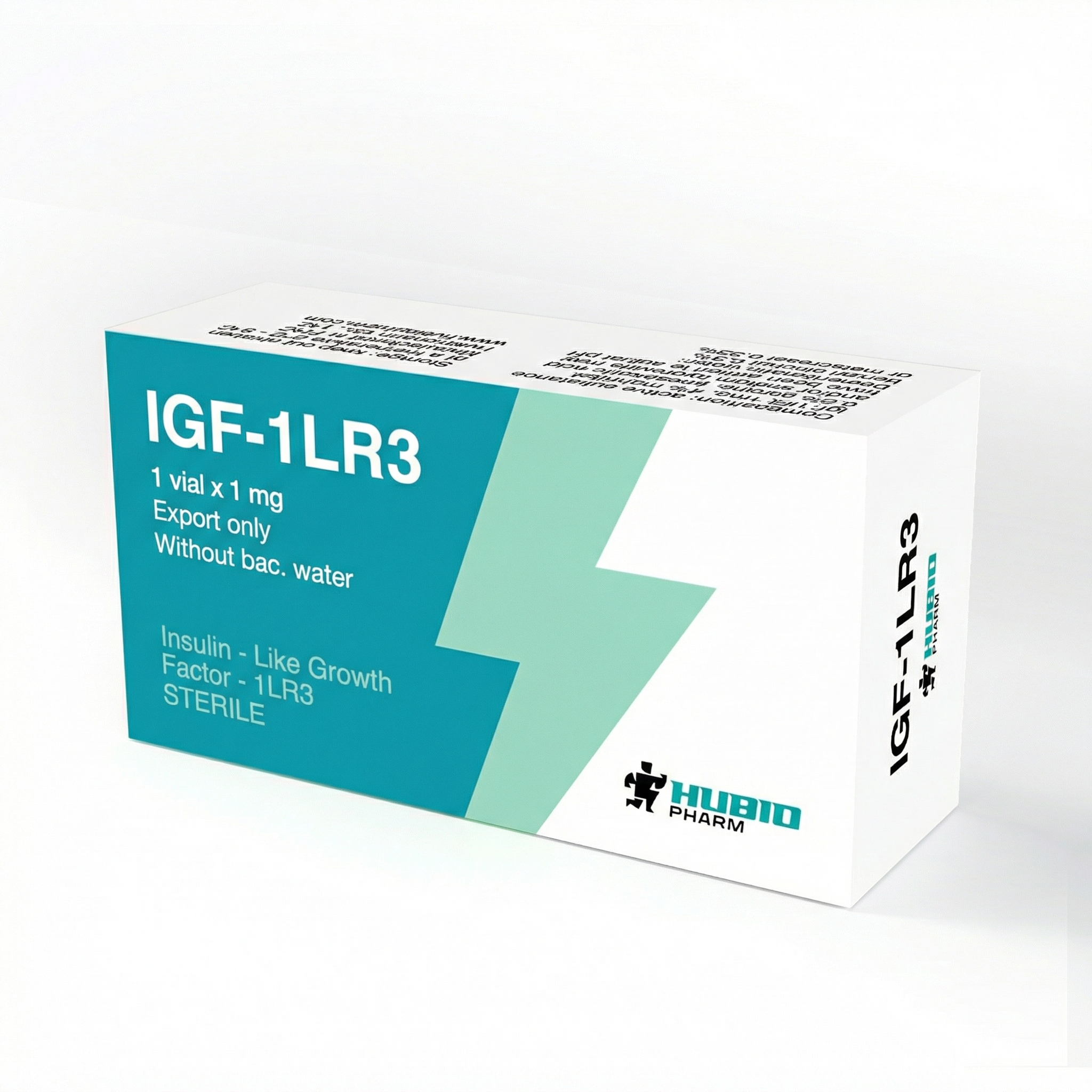
IGF-1 LR3 (Insulin-Like Growth Factor-1 Long Arg3) is a synthetic analog of naturally occurring IGF-1, a peptide hormone involved in cellular signaling pathways related to growth, development, and metabolic regulation at the molecular research level. IGF-1 LR3 has been structurally modified to extend biological half-life and adjust receptor binding characteristics, making it a peptide of interest in laboratory research and experimental biochemistry studies.
This product contains 1 mg of high-purity lyophilized IGF-1 LR3 peptide, manufactured for research laboratory applications only. The formulation is designed for controlled scientific investigation purposes and is not intended for human consumption, therapeutic treatment, or medical diagnostic use.
IGF-1 LR3 is commonly studied in controlled research environments exploring peptide stability, cellular signaling mechanisms, and growth factor interaction models. Due to its extended activity profile, IGF-1 LR3 is often selected for experimental peptide science and biochemical analysis studies requiring long-acting IGF analog compounds.
Proper storage, handling, and laboratory safety protocols should always be followed when working with research-grade peptides. This product is intended exclusively for scientific research use.
Product Specifications
- Product Name: IGF-1 LR3
- Quantity: 1 mg per vial
- Form: Lyophilized powder
- Purity: ≥ 98% (HPLC tested)
- Molecular Formula: C400H625N111O115S9 (approximate)
- Sequence Modification: Arg substitution at position 3, extended N-terminus
- Stability: Stable when stored under recommended conditions
- Intended Use: Laboratory research only
What Is IGF-1 LR3?
IGF-1 LR3 is a modified version of endogenous Insulin-Like Growth Factor-1 (IGF-1). The structural modifications include:
- Replacement of glutamic acid with arginine at position 3.
- Extension of 13 amino acids at the N-terminus.
These changes reduce binding affinity to IGF binding proteins (IGFBPs), which may result in prolonged receptor interaction in experimental models. Due to this modification, IGF-1 LR3 has become a molecule of interest in studies involving cellular proliferation, differentiation signaling pathways, and metabolic research models.
Mechanism of Interest in Research
In laboratory studies, IGF-1 analogs are evaluated for their interaction with:
- IGF-1 receptors (IGF-1R)
- Insulin receptors
- PI3K/AKT signaling pathway
- MAPK/ERK signaling cascades
Researchers investigate how altered receptor affinity and reduced IGFBP binding may influence:
- Cell growth signaling
- Protein synthesis pathways
- Glucose metabolism models
- Tissue culture proliferation rates
It is important to note that these investigations are conducted in controlled laboratory settings and are not equivalent to approved medical applications.
Structural Characteristics
IGF-1 LR3 is classified as a single-chain polypeptide. The molecular modifications are designed to:
- Increase biological half-life in experimental systems
- Decrease affinity for IGF binding proteins
- Maintain receptor-binding properties
The lyophilized format ensures improved stability during storage and transportation under appropriate conditions.
Storage & Stability
To maintain integrity and stability:
- Store at 2–8°C for short-term preservation.
- For long-term storage, keep at –20°C or below.
- Protect from repeated freeze-thaw cycles.
- Avoid exposure to moisture and direct sunlight.
Improper storage conditions may affect peptide stability and experimental reliability.
Research Applications
IGF-1 LR3 is commonly referenced in laboratory research involving:
- Cell culture proliferation studies
- Growth factor signaling research
- Endocrine pathway modeling
- Metabolic pathway investigations
- Molecular biology assays
All applications must comply with institutional, national, and international laboratory regulations.
Quality Control & Testing
Each batch is typically subjected to:
- High-Performance Liquid Chromatography (HPLC) purity testing
- Mass spectrometry verification
- Sterility checks (where applicable to lab-grade materials)
Certificates of Analysis (COA) should be reviewed for detailed batch-specific information.
Regulatory & Safety Notice
IGF-1 LR3 is:
- Not approved by the FDA, EMA, or other regulatory agencies for therapeutic use
- Not intended for human or veterinary consumption
- Not a dietary supplement
- Not a cosmetic ingredient
This product is strictly sold for laboratory research use only.
Handling should be performed by trained laboratory professionals using appropriate protective equipment and standard safety procedures.
Frequently Asked Questions (FAQ)
What is IGF-1 LR3?
IGF-1 LR3 (Insulin-Like Growth Factor-1 Long Arg3) is a synthetic analog of naturally occurring IGF-1. It has been structurally modified to extend its half-life and reduce binding to IGF binding proteins. Due to these properties, it is commonly referenced in laboratory research involving receptor signaling and cellular pathway studies.
Is IGF-1 LR3 approved for human use?
No. IGF-1 LR3 is not approved by regulatory authorities such as the FDA or EMA for therapeutic or medical use. It is not intended for human consumption or clinical treatment.
What is the difference between IGF-1 and IGF-1 LR3?
IGF-1 LR3 contains two structural modifications compared to native IGF-1:
- A substitution at the third amino acid position (Arg3 modification).
- An extended N-terminal sequence.
These changes reduce affinity to IGF binding proteins and may prolong activity in experimental models. Native IGF-1 does not include these modifications.
What is IGF-1 LR3 used for in research?
In laboratory settings, IGF-1 LR3 is studied for its interaction with IGF-1 receptors and its involvement in cellular signaling pathways such as PI3K/AKT and MAPK. Researchers may examine its effects in cell culture, molecular biology assays, and receptor-binding experiments.
Is IGF-1 LR3 a dietary supplement?
No. IGF-1 LR3 is not a dietary supplement and is not intended for ingestion. It is classified as a research chemical and should only be handled by qualified laboratory professionals.
How should IGF-1 LR3 be stored?
The lyophilized peptide should be stored at 2–8°C for short-term preservation. For long-term storage, temperatures of –20°C or lower are recommended. Avoid repeated freeze-thaw cycles, and protect the product from moisture and direct light.
What does “lyophilized” mean?
Lyophilization is a freeze-drying process that removes moisture from the peptide to improve stability during storage and transportation. The result is a dry powder that maintains structural integrity when stored properly.
What purity level is typical for IGF-1 LR3 research material?
High-quality laboratory-grade IGF-1 LR3 is typically tested using HPLC and mass spectrometry, with purity levels commonly ≥98%. Researchers should review the Certificate of Analysis (COA) for batch-specific verification.
Does IGF-1 LR3 require special handling?
Yes. IGF-1 LR3 should be handled using appropriate laboratory safety procedures, including personal protective equipment (PPE) and sterile techniques where required. It is intended for professional research environments only.
Is IGF-1 LR3 regulated?
While IGF-1 LR3 is not approved as a pharmaceutical product for human use, it may be subject to local or international regulations governing research chemicals. Laboratories are responsible for ensuring compliance with applicable laws.
Can IGF-1 LR3 be used in animals?
This product is sold strictly for laboratory research use only. It is not approved for veterinary or animal treatment purposes.
Looking for High-Purity Research Peptides?
Our peptide category features a growing selection of laboratory-grade research peptides used in scientific and biochemical research environments. These compounds are commonly studied in projects related to metabolic pathways, receptor signaling, peptide chemistry, and molecular biology research.
Researchers can explore multiple peptide compounds including HGH Fragment 176-191, Melanotan II, Semaglutide, CJC-1295, and Ipamorelin. Each peptide is supplied in lyophilized form and manufactured with high purity standards to support laboratory testing and analysis.
Visit the full peptide category to browse available compounds and discover more products designed exclusively for scientific research purposes.
Explore All Research Peptides →


Reviews
There are no reviews yet.